
What happened
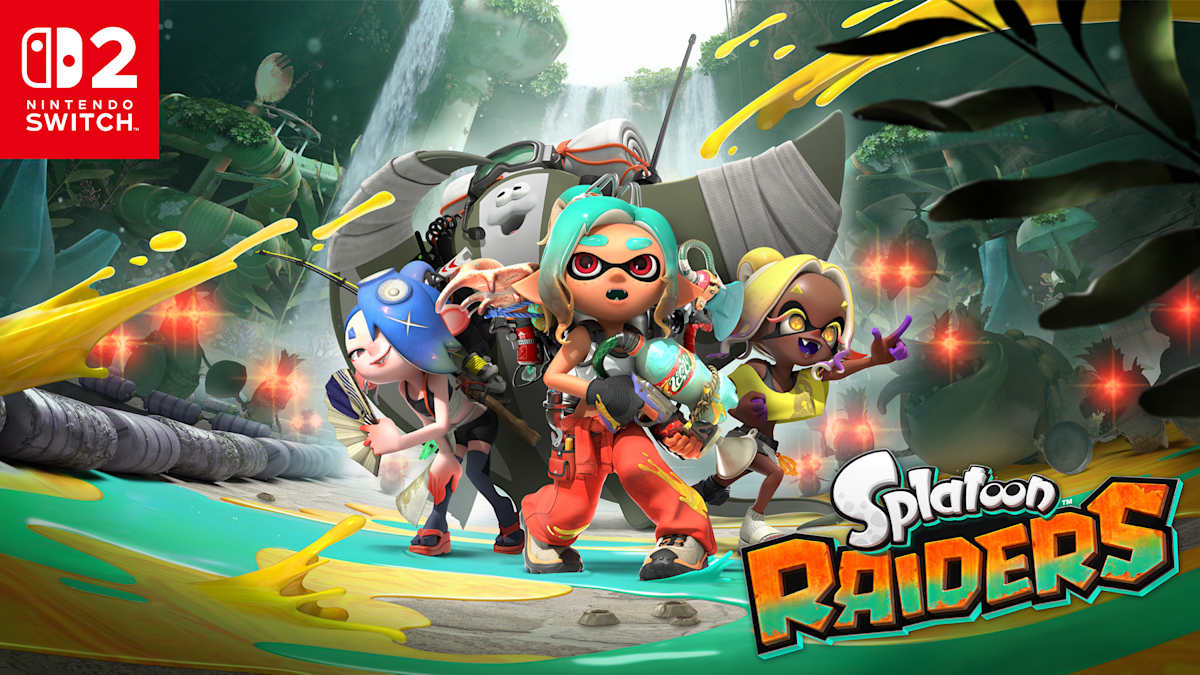
Nintendo released Splatoon Raiders for Nintendo Switch 2 on July 23. The spin-off follows a customizable mechanic stranded with Deep Cut on the Spirhalite Islands, where the group searches for treasure, fights Salmonids, repairs a hideout ship, and builds stronger equipment.
Unlike the main Splatoon games, Raiders is centered on player-versus-environment missions. It can be played solo, with Deep Cut support, or with help from other players in up to four-player cooperative sessions.
How the raid loop works
Missions are organized as shorter raids rather than one continuous open world. Objectives include boss fights, enemy waves, and salvage runs that reward weapons, crafting parts, and materials.
Back at the ship, the player upgrades equipment, creates gadgets, and prepares a new loadout. Nintendo also describes different tank styles, adjustable difficulty, amiibo outfits, and assistance options. The repeated cycle is simple: enter an island, complete an objective, collect resources, and improve the next run.
Comparison with traditional Splatoon
Mainline Splatoon is best known for competitive turf battles, ranked modes, and Salmon Run. Raiders keeps the movement, ink, weapons, and Salmonid enemies but places them inside a progression-focused campaign.
That change makes it closer to a cooperative looter shooter than a conventional multiplayer sequel. There is no need to protect a competitive rank, and a failed run becomes a reason to change gear rather than a loss on a ladder.
Timeline, price, and performance data
The first Splatoon Raiders announcement established it as the series’ first spin-off and a Switch 2 exclusive. Nintendo set July 23 as the release date.
Tom’s Guide listed a digital price of about $49 in the United States and reported a campaign reaching roughly 15 or more hours, based on its review playthrough. The reviewer played solo and described stable 60-frame-per-second performance while criticizing repetition in later raids. That observation does not establish co-op performance.
Those observations are one review rather than a universal result, but they add useful evidence beyond the product description.
What this means for players
Solo players can use the campaign as a lower-pressure way to enjoy Splatoon movement and weapons. Co-op players gain a shared progression loop without entering competitive matchmaking.
The crafting system is likely to be the deciding feature. Good drops and meaningful gadget choices can make repeated islands feel purposeful. If upgrades only increase numbers without changing tactics, the same loop may feel thin after the story ends.
Questions the record does not settle
Nintendo has not provided a complete long-term content roadmap. It is unclear how often new raids, gear, balance changes, or events will arrive, and whether co-op participation changes every mission in the same way.
Nintendo confirms that online play requires Nintendo Switch Online, while local wireless requires additional games and systems. It also says difficulty changes enemy strength without changing loot. Choosing a gentler setting therefore should not be portrayed as accepting an announced loot penalty.
Bottom line
Splatoon Raiders is not Splatoon 4. It is a PvE experiment built from the series’ strongest movement and combat ideas. Early evidence suggests the raid loop and Switch 2 performance are solid, while repetition and post-launch support are the main questions that will decide its staying power.