
A doorway becomes a design problem
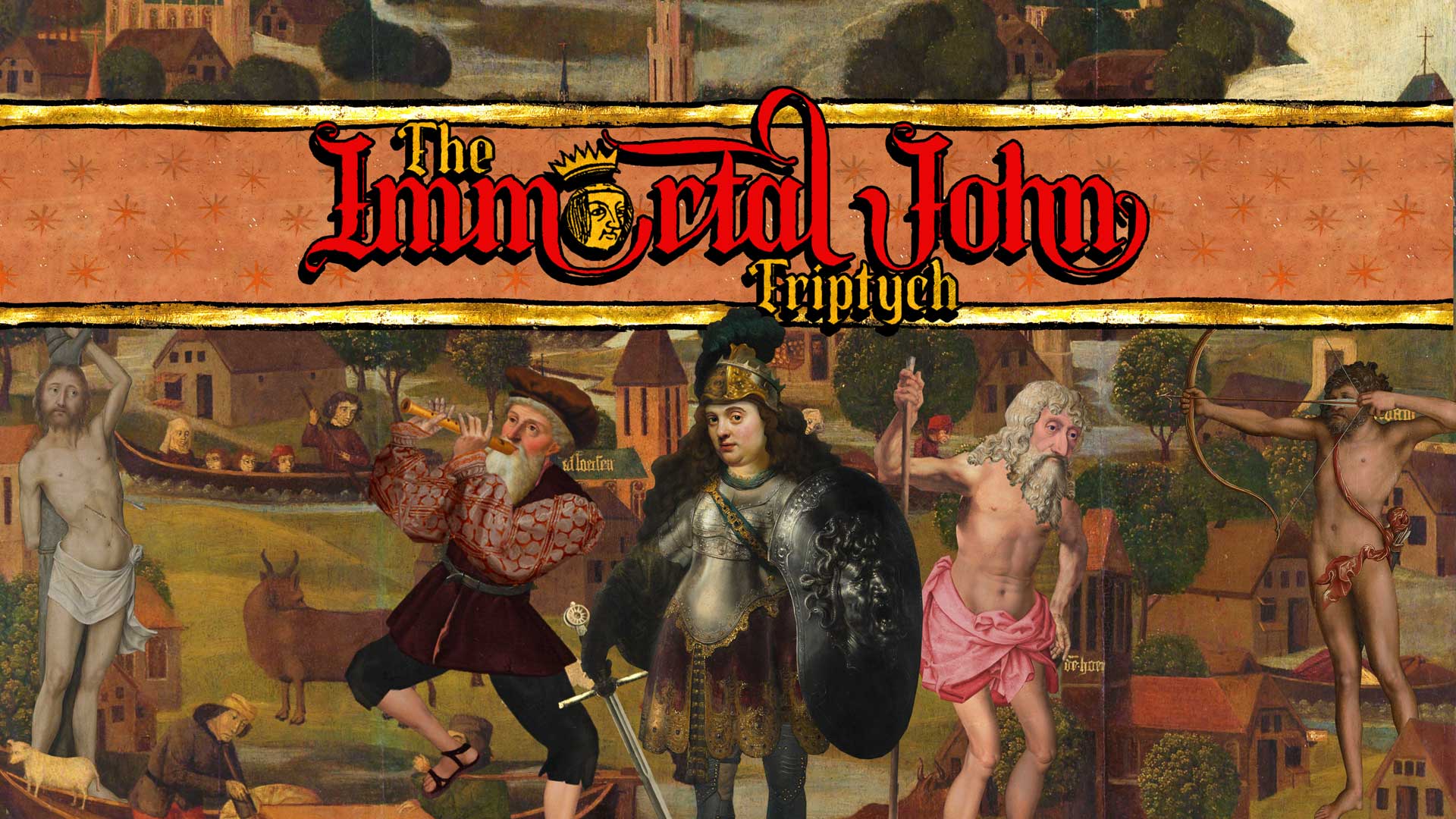
The Immortal John Triptych’s developer diary explains how an unwanted doorway in a painting became the beginning of a puzzle. Rather than remove the feature as a conventional level designer might, the developer built a chain around it: doorway, courtyard, bull, and an absurd bucket item.
The example uses nineteenth-century paintings. Describing all the source material simply as Renaissance art obscures how the collage is assembled.
A fixed image imposes a different kind of constraint from an editable 3D room. A door suggests a destination even if the original painting supplies none. Following that suggestion can turn an awkward piece of scenery into the reason a puzzle exists.
The joke grows out of the space
Absurd inventory objects can feel arbitrary when their only function is to delay the player. Here, the developer’s explanation offers a more legible sequence: an environmental problem leads to a new location, which creates another problem and eventually an item.
That does not prove the finished puzzle is intuitive. It does explain why the joke belongs to this particular scene rather than being interchangeable dialogue. Our interest is in that connection between art and interaction, not a claim that we solved the puzzle ourselves.
The method also has a useful creative implication. A limitation can narrow the available solutions enough to give a scene character. Total freedom is not always what makes a puzzle memorable.
A collection with an announced Xbox date
Akupara’s collection brings together Four Last Things, The Procession to Calvary and Death of the Reprobate. The anecdote comes from the third game. The July 31 Xbox diary also announces August 27 availability, so our earlier statement that it was not a release-date announcement was incorrect.
The diary serves two purposes: it promotes the collection and exposes a small part of the production process. The latter is the more distinctive story. It shows how repurposed art can determine not just a game’s appearance, but the order in which a player discovers and solves a problem.