
Investigation becomes preparation
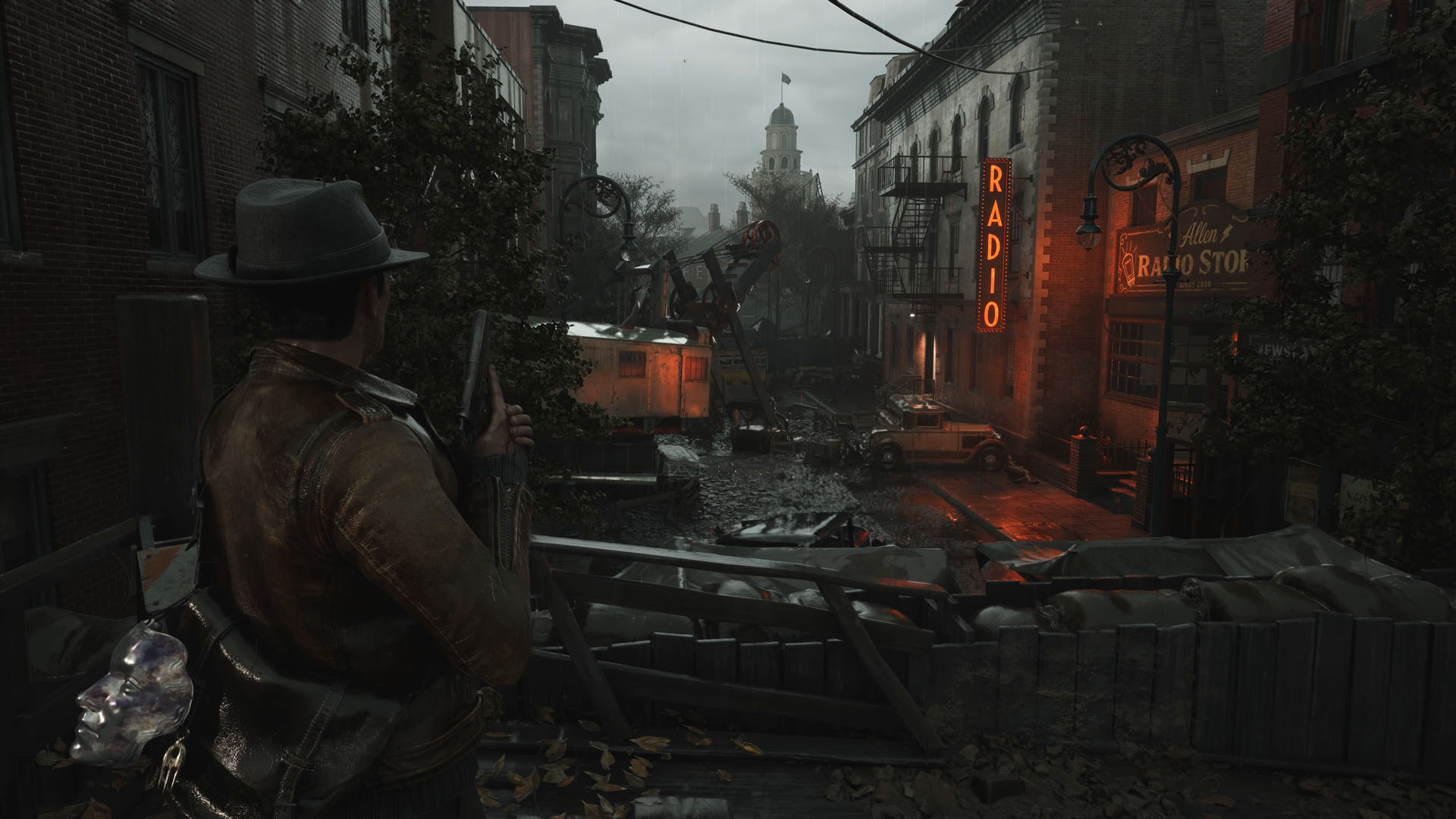
The Sinking City 2’s August 18 launch coverage describes a specific change in detective work. In game director Alexander Gresko’s Xbox Wire post, optional mysteries no longer gate the main route. Solving them can instead yield an inventory slot, a talent or a weapon upgrade. His Redemption Church example puts a clue trail beside the immediate task of opening a blocked water route.
That is more useful than saying investigation is merely “still present.” The announced design connects curiosity to preparation for later danger.
Gresko also describes several focused locations, including Arkham’s streets, a hospital and a fish market, rather than the first game’s open-world structure. His account outlines dodging, punching, stomping, weapon upgrades and scarce ammunition. The post announced Xbox Series X|S availability on August 18.
Enemy behavior gives the survival pitch substance
Frogwares’ Evgeny Maloshenkov, writing on PlayStation Blog the same day, describes Stygian Harvesters as quick ambushers that retreat when pressured. His account contrasts those creatures with the slower, resilient Acheronian Juggernaut, whose behavior and attacks were redesigned. He also identifies the Lethian Revenant’s ranged attacks and tendency to withdraw behind cover.
Maloshenkov frames the sequel as semi-open-world survival horror and its story as standalone. This is the developer explaining its design; it is not evidence that GG Bulletin played the game or measured its performance.
Together, the two posts give concrete examples of encounter design and investigative rewards. Our previous conclusion incorrectly suggested that the sources provided no combat-system or world-layout information.
Our reading: an optional case creates a survival trade-off
The interesting decision is whether taking a detour makes a player safer overall. An extra resource can help later, but searching for it may itself create risk. We would want to know whether the game communicates enough about that trade-off for a player to make a deliberate choice.
“Optional” does not mean inconsequential. Nor should it be taken to mean that players must exhaust every side path to succeed. A well-balanced version of this idea would let different degrees of preparation produce different experiences without making one approach secretly compulsory.
That is our interpretation of the design pitch, not a tested claim about the difficulty curve.
Read behavior, not just a health bar
The developers’ contrasting enemy descriptions suggest another useful assessment: whether a player can recognize a threat and choose a response before spending scarce ammunition. A retreating opponent and a slow obstacle should ask different questions of positioning.
For our future hands-on coverage, the important comparison would be between understanding an enemy’s behavior and simply obtaining a stronger weapon. If better information changes a decision, investigation and survival are doing meaningful work together. If the answer is always more damage, that connection would be much weaker.
What this corrected report covers
This article explains the announced design through the complete developer accounts. It does not claim a comprehensive map, an optimal combat strategy or a verdict on the finished game.
We removed secondary dependencies that had not been fully verified for this correction. The remaining sources establish specific systems, but both come from Frogwares and should not be mistaken for independent corroboration of quality. Players looking for performance findings or a recommendation should consult a current review of their platform, not treat a launch announcement as a test result.